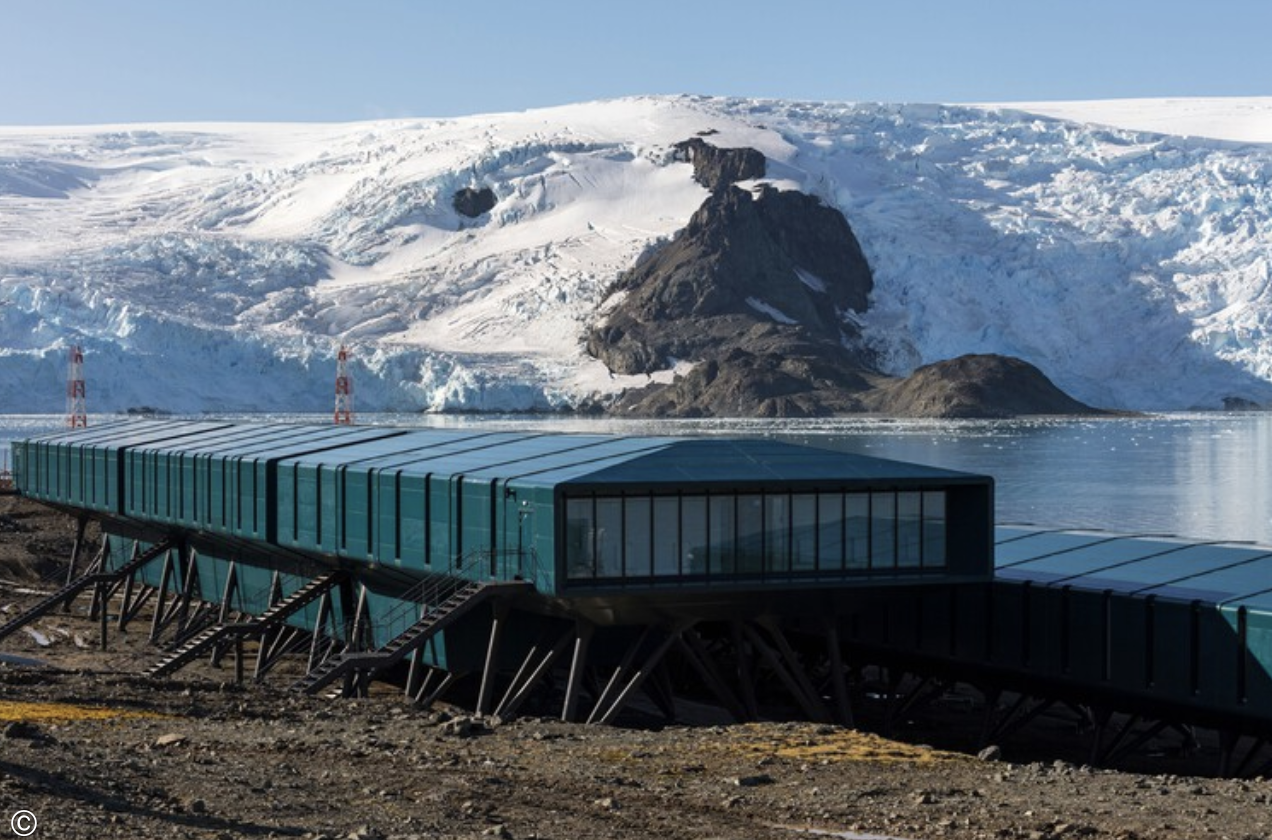
According to PROANTAR Brasil, Brazil’s principal Antarctic research facility has gained international recognition for its innovative architectural design. The Comandante Ferraz Antarctic Station, designed by Estúdio 41, has been featured prominently on ArchDaily, one of the world’s most influential architecture websites.
The station represents a remarkable achievement in extreme-environment construction. Following a devastating fire that destroyed the original facility in 2012, Brazil invested significantly in rebuilding a state-of-the-art research complex that could withstand Antarctica’s harsh conditions while maintaining environmental sustainability and operational efficiency.
The architectural design by Estúdio 41 incorporates modular construction techniques that allowed components to be prefabricated in Brazil and assembled on King George Island. This approach minimized environmental impact during construction while ensuring structural integrity against extreme winds, temperatures reaching minus 40 degrees Celsius, and seismic activity.
The facility spans approximately 4,500 square meters and accommodates up to 64 people during the Antarctic summer season. It includes laboratories for marine biology, meteorology, and glaciology research, as well as living quarters, medical facilities, and support infrastructure. The design emphasizes energy efficiency through solar panels, wind generators, and advanced insulation systems.
According to PROANTAR Brasil, the station’s recognition on international platforms underscores Brazil’s growing leadership in Antarctic science and sustainable polar architecture. The Comandante Ferraz Station continues to serve as a vital hub for Brazilian researchers conducting critical studies on climate change, biodiversity, and atmospheric sciences in the Antarctic Peninsula region.