A large leopard seal has captured public attention on a New Zealand beach, drawing more than 150 spectators and reminding residents of the remarkable marine megafauna that inhabit polar waters.
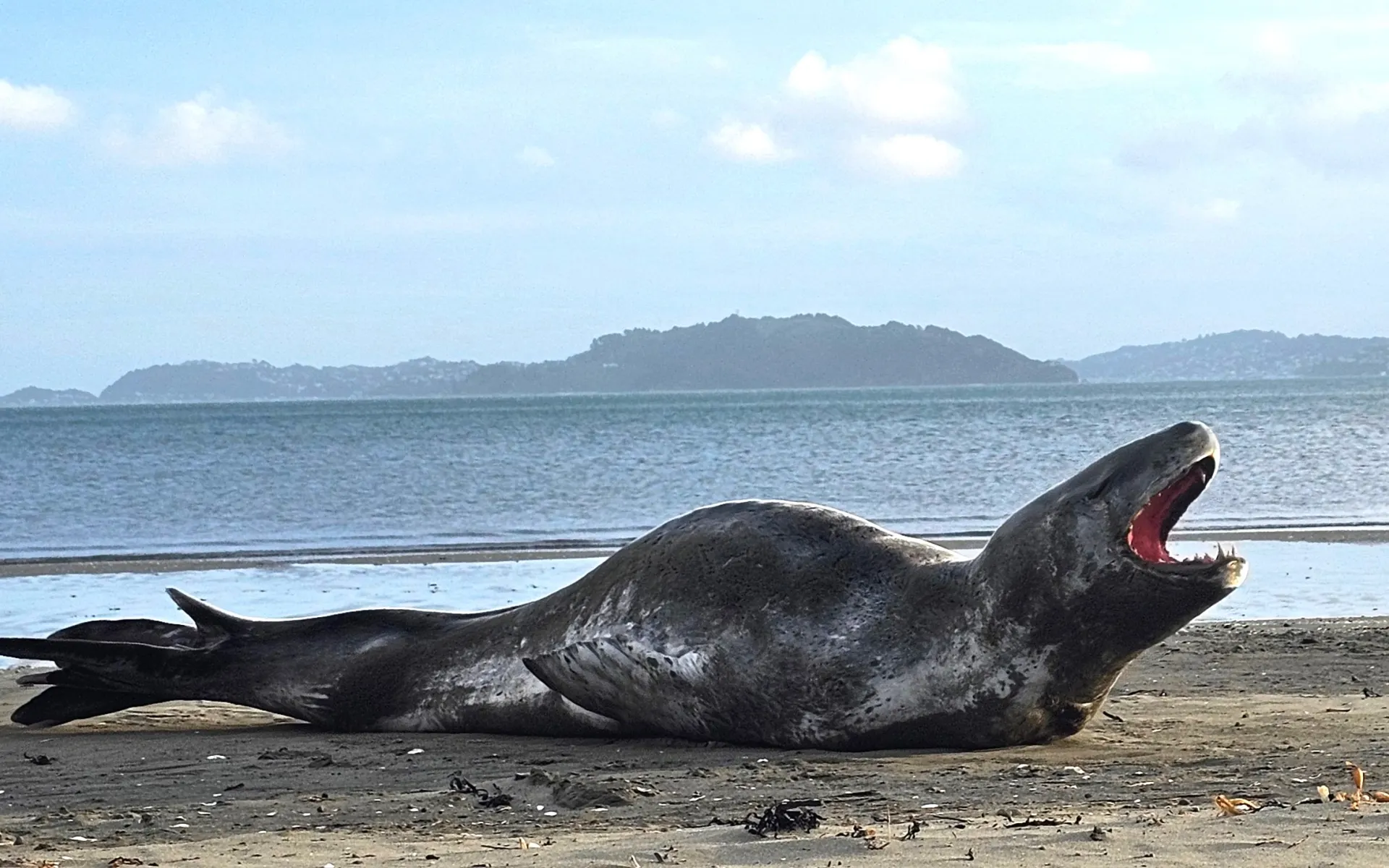
A leopard seal that hauled out on Petone Beach in Lower Hutt over the weekend transformed a popular Wellington foreshore into an impromptu wildlife sanctuary, attracting dozens of curious onlookers. The animal rested on the sand from Saturday, September 5th, offering residents and visitors an unexpected encounter with Antarctic fauna.
Community Demonstrates Exemplary Wildlife Etiquette
The seal’s arrival sparked considerable public interest. According to local reporting, photographers, families and dog walkers gathered to watch the seal as it rested on the sand. By Sunday afternoon, Department of Conservation (DOC) estimates placed the visitor count at more than 150 people—a substantial crowd managed with remarkable restraint.
What distinguished this encounter from typical urban wildlife sightings was the community’s disciplined behaviour. DOC ranger Melody McLaughlin noted that people proved genuinely respectful, maintaining space and giving the animal plenty of room. Dog owners proved particularly conscientious: despite Petone Beach being officially designated as an off-leash area, all canine owners voluntarily kept their pets on leads throughout the seal’s stay—a notable demonstration of collective wildlife awareness.
Before DOC rangers arrived to establish formal perimeters, local residents took their own initiative. Volunteers constructed a driftwood barrier around the animal, creating a physical reminder of appropriate boundaries and reflecting the community’s commitment to marine mammal protection.
Safety First: The Apex Predator Protocol
The Department of Conservation responded swiftly with precautionary measures. Rangers erected warning signs and marked out a perimeter, establishing guidelines for people to stay at least 20 metres away from the animal at all times. This distance requirement reflects the leopard seal’s status in the marine food web: these apex predators can severely injure or kill small dogs and command respect from human observers.
The messaging resonated. McLaughlin specifically commended dog owners, noting that leopard seals “can severely injure or kill dogs that get too close, particularly smaller breeds.” The Petone Beach public demonstrated they understood this ecological reality, responding to education with appropriate caution.
Antarctic Visitors Follow Predictable Patterns
Leopard seals are mostly found in Antarctica, with small numbers visiting New Zealand waters. While noteworthy to local observers, such visits follow a well-documented seasonal pattern. Wellington’s Department of Conservation reports that three to four leopard seals typically haul out on the region’s beaches annually—suggesting that this September visitor represents part of a regular, if unpredictable, migration cycle.
The Petone Beach seal is the latest in a succession of recent Southern Ocean arrivals. A juvenile leopard seal appeared at nearby Oriental Bay in July 2026, while historical records document a 2.5-metre sub-adult resting on the same Petone foreshore in 2022. This pattern of recurrent visits reflects the broader ecology of seal movements in the Southwest Pacific region and underscores the dynamic nature of marine mammal range expansion.
A Moment of Rest in the Tidal Cycle
The seal remained ashore throughout the weekend, spending most of its time in restful repose. Department of Conservation staff noted that the animal appeared in excellent health, with no visible signs of injury or distress—reinforcing the understanding that terrestrial haul-outs represent normal, essential behaviour in the seal’s annual cycle.
These resting periods allow deep-diving carnivores to recover between feeding bouts in the open ocean. Authorities anticipated the seal would return to the water within a day or two, following the completion of its tidal rest cycle. By Monday morning, the animal had indeed departed, slipping back into Wellington Harbour and returning to its marine domain.
A Reminder of Antarctic Interconnection
The Wellington sighting serves as a tangible reminder of Antarctica’s reach—and of the interconnected marine ecosystems that link polar regions with temperate coastlines across the Southern Hemisphere. Three or four leopard seals appear on Wellington beaches annually, yet each appearance offers a moment of wonder and an opportunity for public education about apex predators and marine conservation.
As ocean systems shift and seal populations respond to changing conditions, encounters like the Petone Beach gathering may become increasingly routine. What matters is how communities respond—with restraint, curiosity, and respect. Wellington’s public demonstrated that humans can coexist peacefully, even briefly, with some of the Southern Ocean’s most formidable predators.
About Leopard Seals
Hydrurga leptonyx, the leopard seal, is one of the Southern Ocean’s most formidable marine predators. Distributed throughout Antarctic and sub-Antarctic waters, these streamlined hunters can exceed four metres in length and are known for their aggressive feeding behaviour on fish, krill, penguin species, and smaller seal species.
Leopard seals possess long heads, powerful jaws, and distinctive leopard-like spotting that gives the species its common name. They are solitary hunters, adapted for life in the frigid Southern Ocean, yet periodic movements northward into New Zealand and Australian waters reflect their ecological range and the oceanographic processes that transport Antarctic fauna into warmer temperate latitudes.
Source References
- 1News, September 5, 2026: “Leopard seal delights crowds at Petone Beach”
- RNZ News, September 2026: “Leopard seal draws crowds at Lower Hutt beach”
- Wellington community documentation and Department of Conservation ranger statements
- Department of Conservation official communications and wildlife management protocols