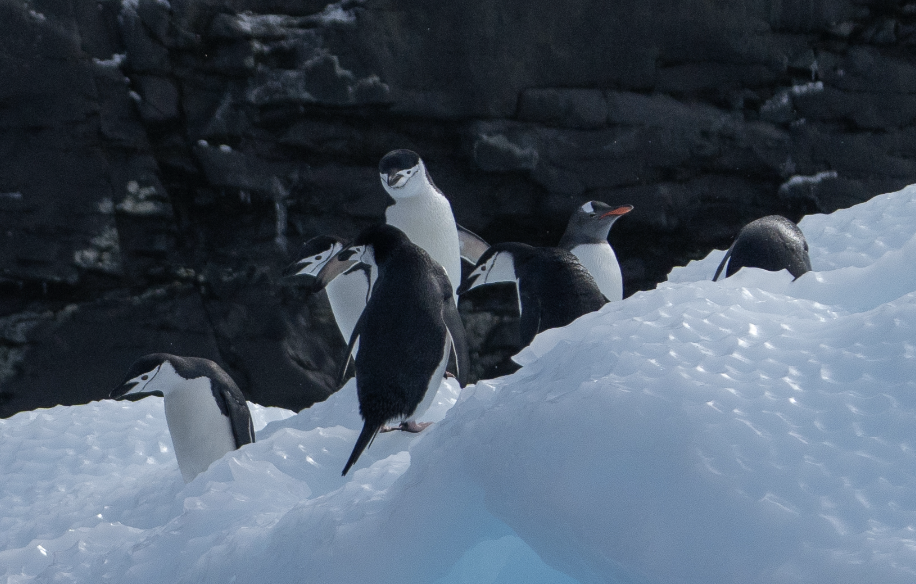
Bio-logging from 23 Adélie penguins shows that beneath Antarctic sea ice, the birds dive progressively deeper and travel farther with each foraging trip—yet their feeding rates never dip. The paradox, published on 15 July in Proceedings of the Royal Society B: Biological Sciences, points to a newly described mechanism called “functional prey depletion,” where prey abundance stays stable, but accessibility collapses under persistent predator pressure.
Around every major seabird colony lies a band of depleted water known as Ashmole’s halo. The classical explanation is arithmetic: more birds eat the nearby food, forcing the colony to commute ever farther to feed its chicks. But a new study, led by Japan’s National Institute of Polar Research (NIPR), argues that the math is only half the story. Beneath the ice, something more subtle is at play.
“Traditionally, this pattern has been mainly explained by prey depletion: Predators consume prey near the colony, reducing prey abundance,” said Hina T. Watanabe, a postdoctoral scholar at NIPR and corresponding author of the paper. “However, prey may also become harder to catch if they change their behaviour or distribution in response to predators.”
Testing that distinction in the open ocean is notoriously difficult—fine-scale predator-prey encounters are almost impossible to observe directly. Watanabe’s team found an elegant workaround in the geography of East Antarctica.
A natural experiment beneath landfast ice
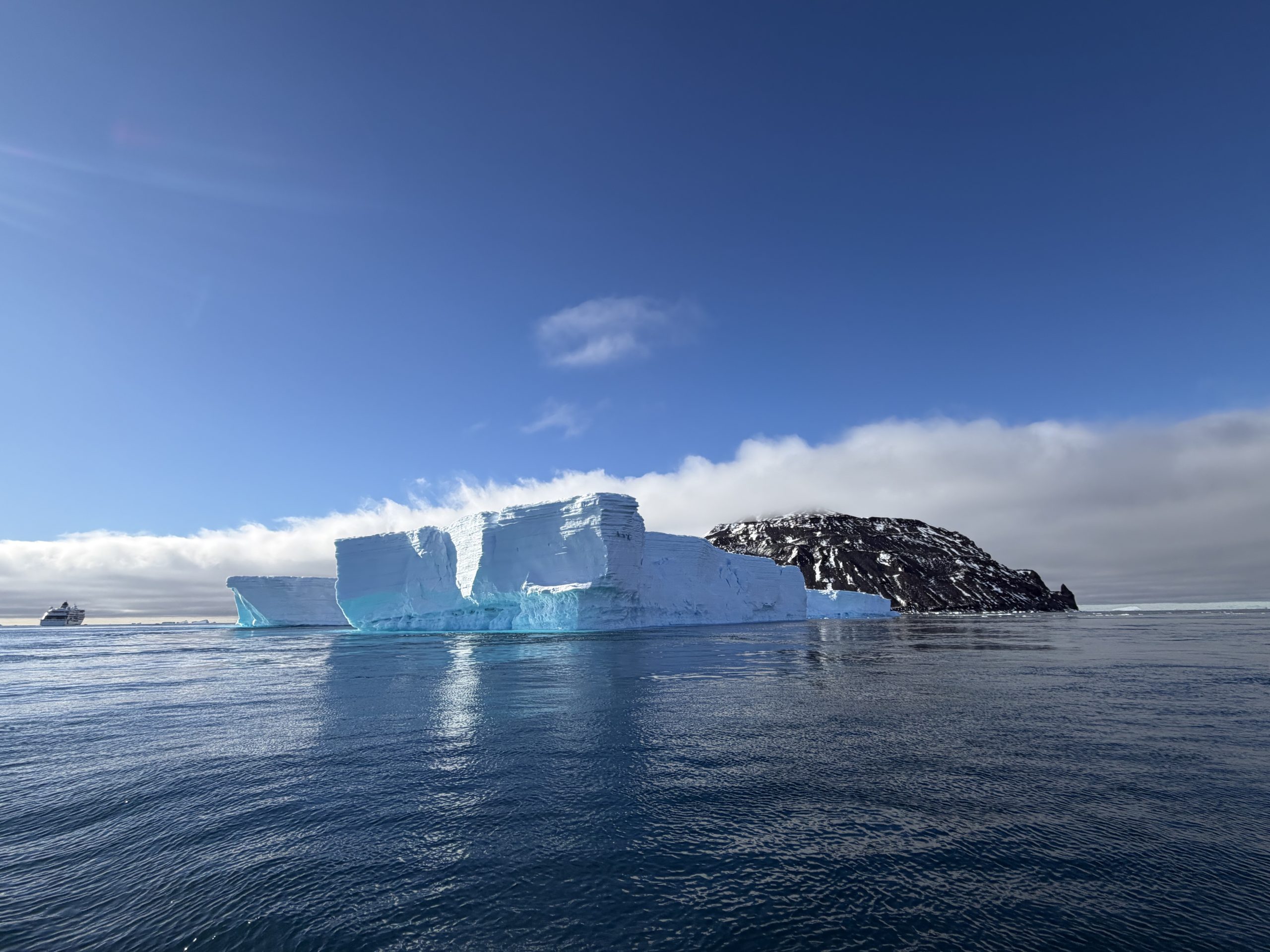
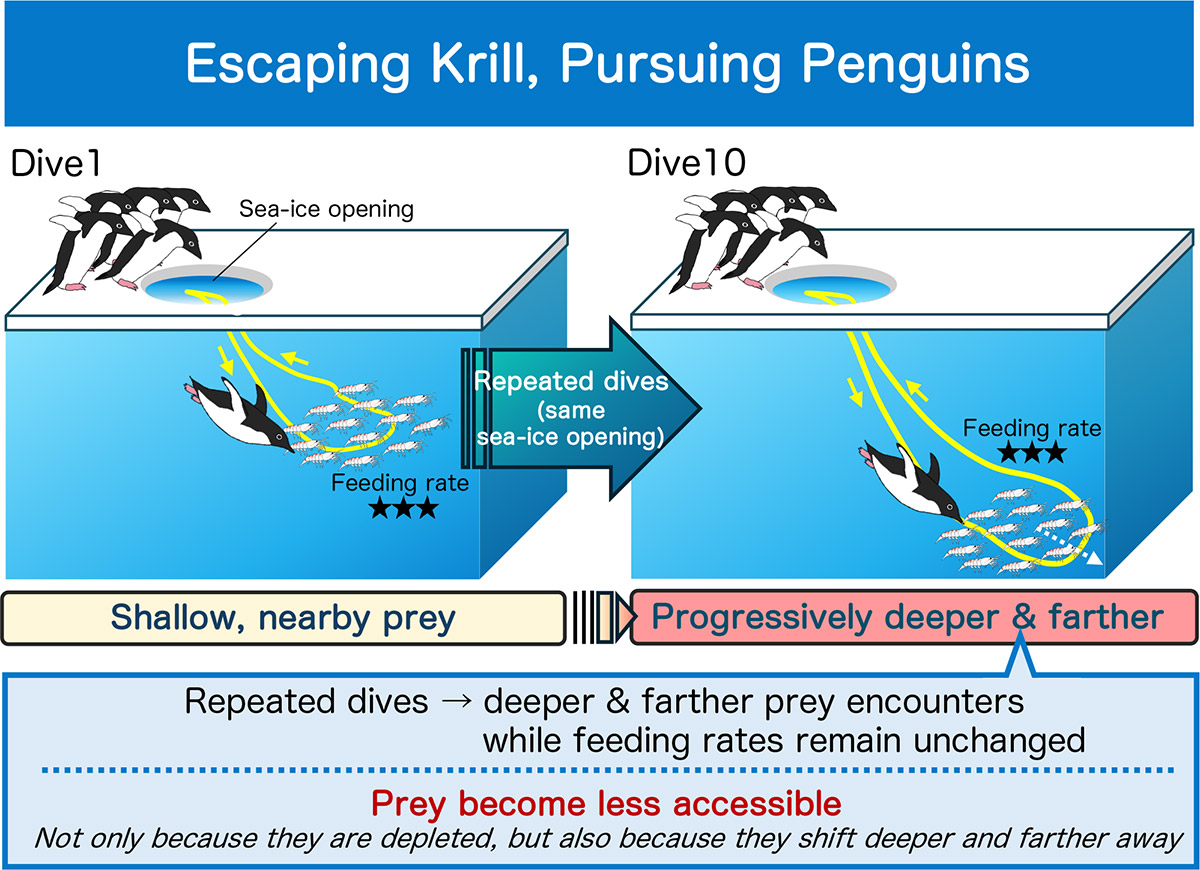
The researchers tagged breeding Adélie penguins at a colony adjacent to a bay sealed by landfast sea ice. With only a handful of shared openings to the water below, every foraging bird was funnelled through the same narrow access points. The result was a series of localized, intensely repeated dive “hotspots”—an accidental but ideal natural experiment for tracking how prey behaviour changes under sustained harassment.
“We used high-resolution bio-logging data to reconstruct three-dimensional underwater dive paths and identify feeding events beneath Antarctic sea ice,” Watanabe explained. The devices captured movement, depth and acceleration, while animal-borne cameras confirmed which encounters were genuine krill captures. By instrumenting only nesting birds, the team ensured that every individual had to return to the same colony between trips—the defining condition of Ashmole’s halo.
The dataset spanned 30 foraging trips and more than 6,000 individual dives from 23 penguins.
Deeper, farther, yet just as full
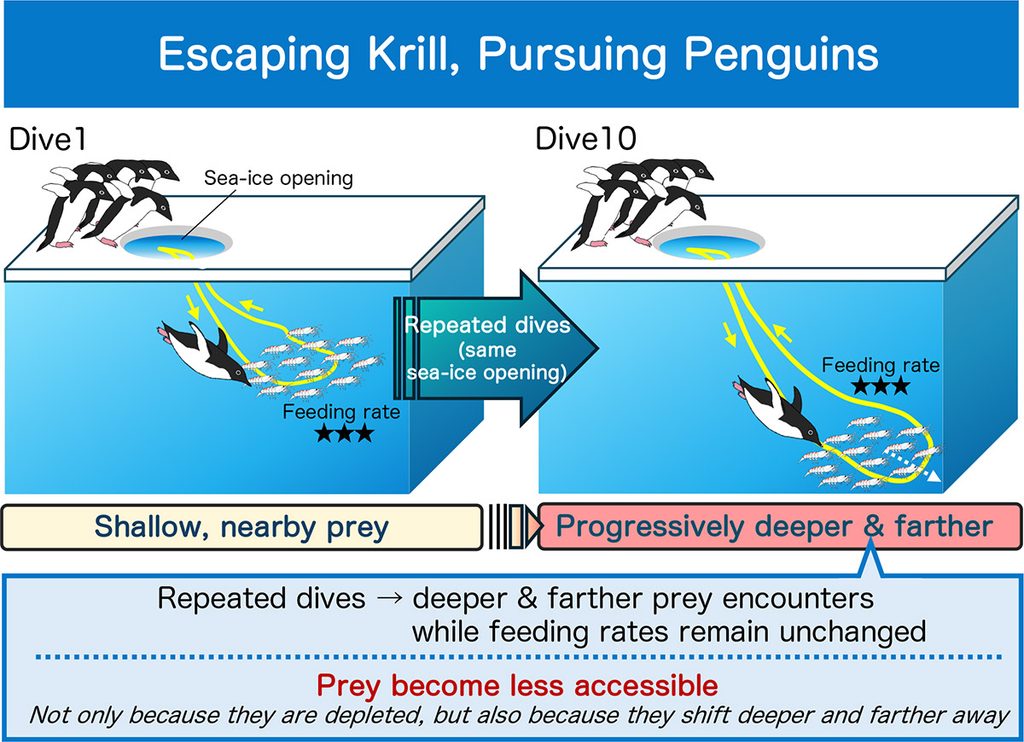
The pattern emerged consistently across two scales. Within a single dive bout from the same ice opening, penguins had to swim progressively deeper and travel farther under the ice to encounter prey. Yet their feeding rates—the speed at which they caught krill once a patch was found—remained flat. The same signature appeared across the colony: birds foraging closer to home worked harder underwater, with virtually no change in how quickly they captured krill once located.
If prey were simply being eaten to depletion, catch rates should have fallen. Instead, the penguins caught the same amount at a steadily rising energetic cost. That distinction, Watanabe says, is the study’s core contribution.
“Food can become harder to obtain even when it has not necessarily been depleted,” she said. “We found that penguins had to dive progressively deeper and farther to encounter prey, but once prey were encountered, feeding rates remained unchanged. This suggests that prey accessibility—not only prey abundance—can shape predator foraging patterns.”
The team proposes a mechanism they call functional prey depletion. Krill remain present in the water column, but repeated disturbance pushes them deeper and farther out, eroding their effective availability around the colony over time. By pairing reconstructed 3D dive paths with video-confirmed feeding events, the study offers rare empirical evidence that predator disturbance actively reshapes prey distribution—not just prey numbers.
What the data can’t yet see
The authors are careful about the limits of their inference. “We inferred changes in prey accessibility from penguin behaviour, but we did not directly observe krill movements,” Watanabe noted. The logical next step is to pair animal-borne sensors with technologies capable of mapping prey distribution directly beneath the ice—sonar, echosounders or swarming autonomous underwater vehicles.
Her ambition reaches beyond penguins and krill. “Ultimately, I hope to understand how interactions between predators and prey generate ecological patterns across scales, from individual foraging behaviour to colony-scale resource landscapes.”
The study was co-authored by Junichi Takagi (Kyoto University) and Akinori Takahashi (NIPR and SOKENDAI), and funded by the Japanese Antarctic Research Expedition, NIPR and the Japan Society for the Promotion of Science.
Sources & usage notes:
- Paper: Watanabe, H. T., Takagi, J. & Takahashi, A. (2026). Proceedings of the Royal Society B: Biological Sciences. DOI: 10.1098/rspb.2026.0490
- Press material: National Institute of Polar Research — notice (15-07-2026)
- Quotes: All reproduced verbatim from the official press release and are cleared for use in news coverage.
- Multimedia: Three figures and photos are available via the NIPR notice (credit: Hina T. Watanabe, NIPR). These are restricted to editorial coverage of this paper with proper attribution—please verify the specific permission terms directly with NIPR before publishing.