In the icy waters surrounding Antarctica, few creatures inspire as much fascination and fear as the leopard seal. Named for its spotted coat and feline ferocity, Hydrurga leptonyx reigns as one of the Southern Ocean’s most formidable apex predators. Yet despite its ecological importance, this solitary hunter remains shrouded in mystery, its behavior and impact on Antarctic ecosystems only now being fully understood through cutting-edge research.
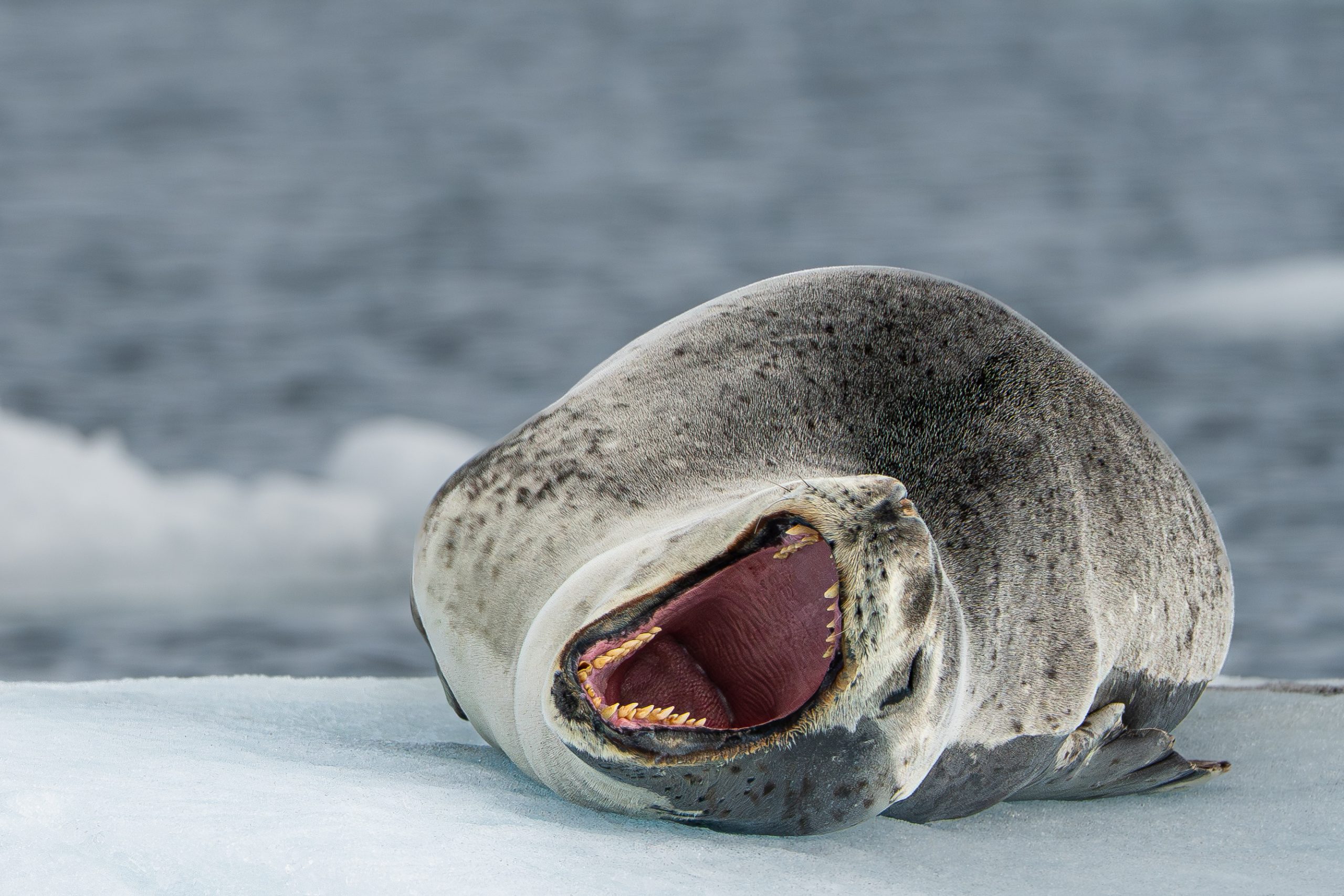
With a muscular body reaching lengths of up to 3.3 meters for males and up to 3.8 meters for females and weighing as much as 590 kg, leopard seals possess the physical tools necessary for their role at the top of the food chain. They are the most formidable hunters of all the seals and the only Antarctic true seals that regularly feed on warm-blooded prey, according to research from National Geographic. Their oversized jaws and inch-long canine teeth make them uniquely adapted for hunting these preys.
A Reptilian Head on a Serpentine Body
Hauled out on an ice floe, the animal is unmistakable at close range. In the second edition of The Complete Guide to Antarctic Wildlife (Princeton University Press, 2008), the ornithologist Hadoram Shirihai describes a long, slim, almost serpentine body carrying a comparatively enormous reptilian head—long snout, powerful jaws, a broad gape and a relatively small dark eye—with unusually large fore flippers set close to the middle of the body. Adults are very dark, nearly black or blue-grey along the flanks, with a sharp line dividing the dark back from the paler underside; the belly, lower flanks and fore flippers are almost silver, scattered with contrasting dark spots. On the head that boundary falls just below the eye, leaving a broad silver-grey band across the gape and lower cheek. Behind it sit very long canines and massive incisors that meet with precise occlusion. The spotting that gives the species its name varies mainly between individuals rather than by sex or age, and on ice the seal responds to human presence with slow, deliberate movements.
The guide’s measurements sharpen the picture. Females, the larger sex, reach 3.8 m and 500 kg, while males run 2.8–3.3 m and around 300 kg; occasional reports of animals of 4.5 m and 600 kg are treated as rare cases still requiring verification. Pups arrive at roughly 1.0–1.2 m and 30 kg. At sea, Shirihai notes, the animal often swims with its head held up and submerges head first, rolling its back into view—a silhouette he considers enough for immediate identification. Its voice carries further still: underwater trills and moans pitched low and drawn out, along with gargles, grunts, higher whistles and vibrating guttural alarm calls, the same repertoire recorded from animals resting on ice.
Masters of Specialized Hunting
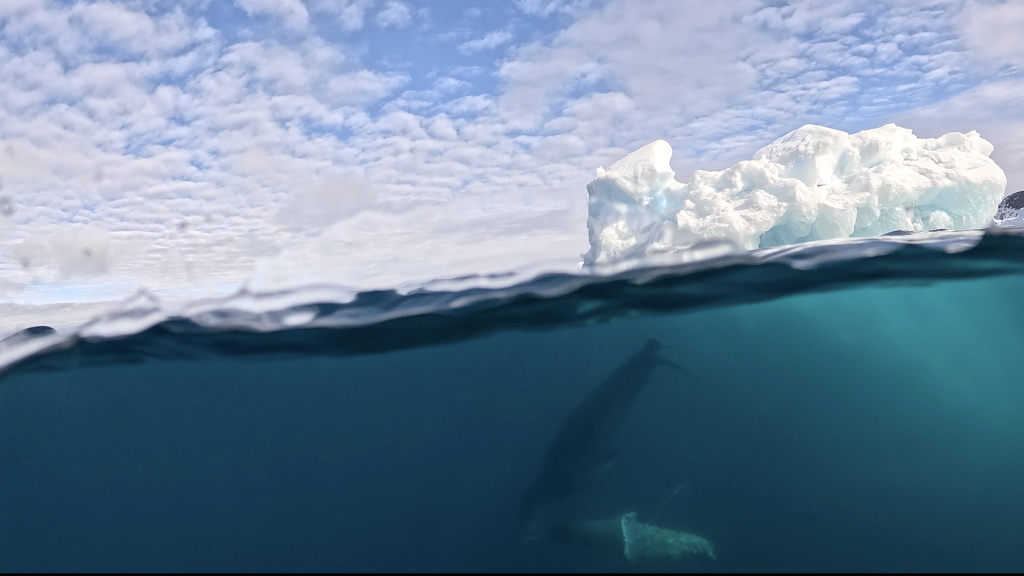
Recent scientific advances have fundamentally altered our understanding of leopard seal feeding behavior. While these predators were long classified as dietary generalists, a groundbreaking 2025 study from Baylor University using whisker analysis revealed something remarkable: nearly 60% of individual seals consistently target specific types of prey—sometimes for years at a time—specializing at different trophic levels within the food web.
The dietary versatility of leopard seals as a species remains impressive. Roughly half a leopard seal’s diet is made up of fish and krill, the tiny crustaceans that form the base of the Antarctic food web. On average, fish and krill make up a substantial portion of their diet, but this varies dramatically by individual—some rely almost entirely on krill, while others specialize in penguins or seals. Their specialized teeth allow them to strain krill from the water, functioning much like baleen whales. But it is their hunting of penguins and other seals that has made them infamous.
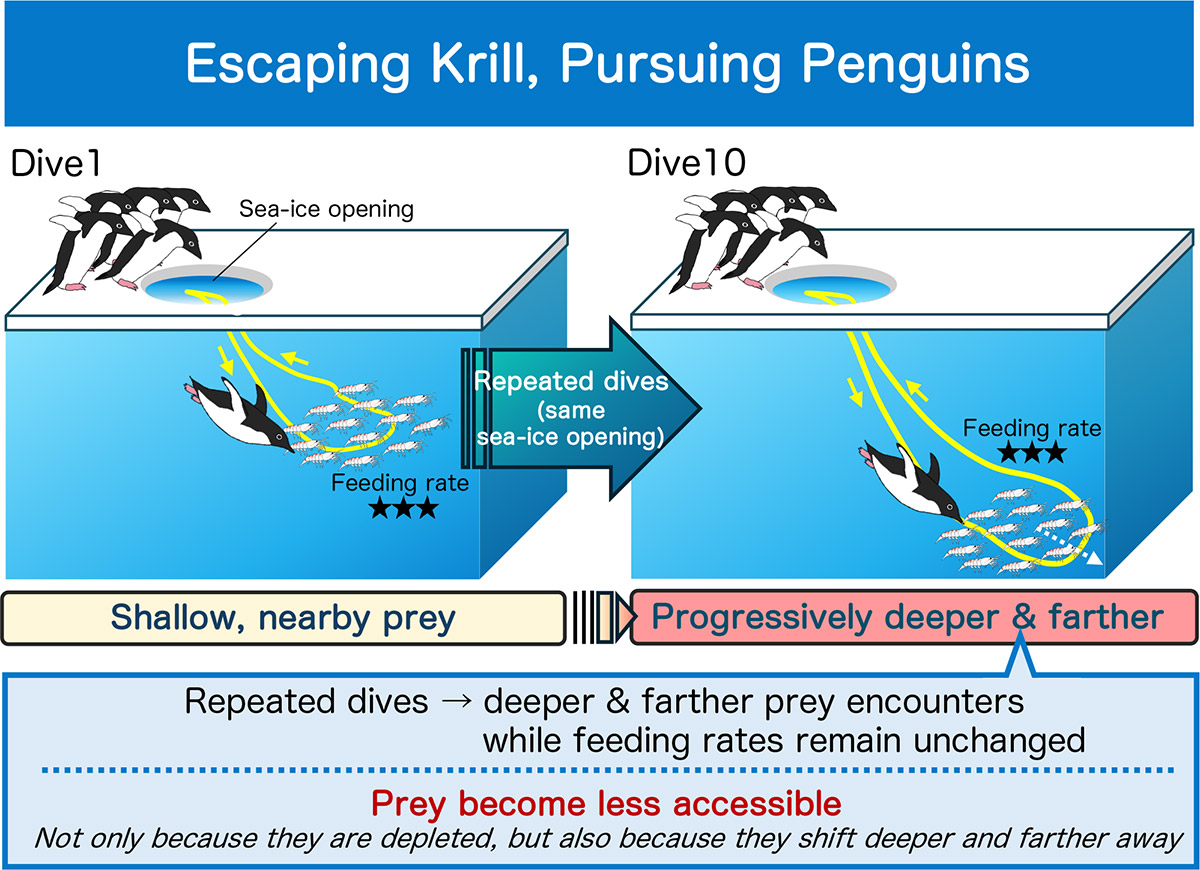
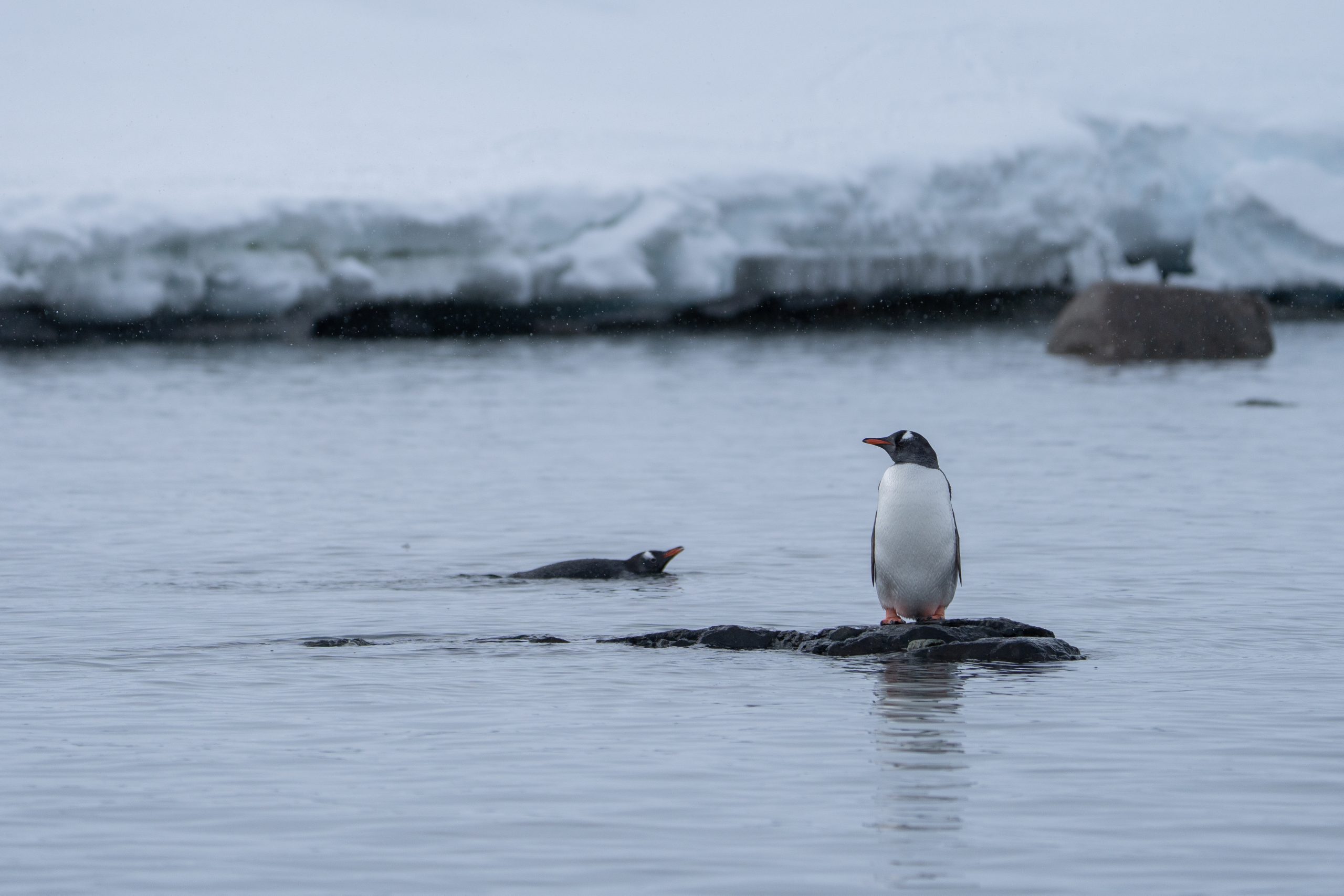
The relationship between leopard seals and penguins is among nature’s most dramatic predator-prey dynamics. They wait near the ice edge where penguins jump in and out of the water, swiftly catching them by the feet with their large flippers. The captured bird is thrashed about on the water until its skin peels away, a brutal but efficient feeding method.
Shirihai’s account adds a caveat to the penguin-hunter image. He describes a broad diet built principally on krill, fish, seabirds—penguins above all, though predation varies sharply by locality—and young seals, crabeaters in particular, especially in seasons when other food is scarce; yet he suggests the species probably takes cephalopods more than anything else, a staple that leaves almost no trace in the shoreline encounters visitors witness. The famous ambush is a specific tactic rather than general behaviour: one or two animals station themselves near a penguin colony, catching birds as they return from fishing or taking the young, then killing and skinning them by banging the carcass against the water.
Ecosystem Engineers with Outsized Impact
The ecological consequences of leopard seal specialization can be staggering. At Cape Shirreff, Antarctica, just 20 leopard seals are believed to have driven a catastrophic drop in the fur seal population, with up to 70% of pups lost to predators annually. This finding, published in the journal Ecology and Evolution, demonstrates how a small number of specialized individuals can reshape entire populations.
A 2018 study published in PLOS ONE tracked four leopard seals for periods ranging from 142 to 446 days, revealing migratory behaviour between the pack ice, close to the Antarctic continent, and the sub-Antarctic island of South Georgia. This research showed that leopard seals use South Georgia as a central foraging hub, exploiting local penguin and seal populations with remarkable efficiency.
Understanding population dynamics remains challenging. The leopard seal population is estimated to be 222,000–440,000, though these figures may be negatively biased due to the difficulty of surveying solitary animals across vast Antarctic territories. More recent genetic research from 2023 estimated the effective population size at around 24,000 individuals, according to a study in PLOS ONE.
Range data in the guide help explain why counting them is so difficult. Leopard seals are widespread but uncommon throughout the Antarctic and subantarctic zones, reaching as far south as 78°S, with breeding confined to Antarctic pack ice. They are uncommon winter visitors to the subantarctic islands, although numbers there peak at several hundred every four to five years, most reliably at Atlas Cove on Heard Island between July and September. Individuals reach southern New Zealand, Australia, South America and South Africa fairly frequently, and turn up exceptionally at Tristan da Cunha, Lord Howe, the Cook Islands and Juan Fernández. Shirihai puts the population at 100,000 at minimum, and perhaps 220,000–450,000 as of the 1980s—a bracket almost identical to the one still quoted today, which says less about population stability than about how rarely the estimate has been revisited.
The Human Dimension: Curiosity and Caution
Encounters between humans and leopard seals are rare but highly instructive. In July 2003, Kirsty Brown, a marine biologist at Rothera Research Station (UK), was attacked and drowned by a leopard seal—the only confirmed human fatality from this species. The tragedy prompted a comprehensive investigation by the British Antarctic Survey analyzing three decades of human-leopard seal interactions.
The findings were nuanced. Interactions occurring at the ice edge, where leopard seals seek out prey, resulted in the highest response from leopard seals. However, in-water interactions generally described the seal’s behaviour as displaying curiosity, and there were no records of interactions where ‘curious’ leopard seals showed subsequent hunting or attack behaviour. Researchers point out that leopard seals may mistake people for their typical prey, such as penguins, given similarities in vertical posture.
The guide itself shows how recent that reassessment is. Its species account holds that leopard seals can behave aggressively near boats and their occupants, but that their fierce reputation toward humans is not particularly warranted, since the animal was not known to attack people directly. Published five years after the Rothera death, the line reads today as a measure of how thin the record of genuine attacks remains: a predator entirely capable of killing a person, and almost never inclined to.
Yet not all encounters are aggressive. Photographer Paul Nicklen experienced an extraordinary interaction where a female leopard seal repeatedly brought him penguins while he photographed underwater—behavior that suggests complex social cognition and perhaps an attempt to ‘feed’ what the seal may have perceived as an incompetent hunter.
A Calendar Written on the Ice
What exposes the species to a shrinking cryosphere is less a matter of habitat preference than of scheduling. Shirihai sets out the annual cycle: moult in January and February, occasionally dragging on into June, and pupping between October and December. Males turn highly vocal before and during the breeding season, from early November to January, and are rarely seen while females nurse. Pups are born on pack ice after a gestation of about nine months, and lactation lasts roughly a month; mating is believed to take place in the water from mid-November into December, though other sources place it as late as January to March. Males become sexually mature at three to six years, females at two to seven.
Every stage of that calendar—moult, birth, lactation and the vocal displays that precede mating—happens on or beside floating ice, which is what makes its retreat more than a change of scenery. Diving behaviour, by contrast, remains almost undocumented: the guide reports no published information, presuming only that the animals stay near the surface, where most of their prey is found. The species is monotypic, listed at lower risk, protected, and has been subject to very little commercial fishing or hunting for research.
A Climate-Vulnerable Future
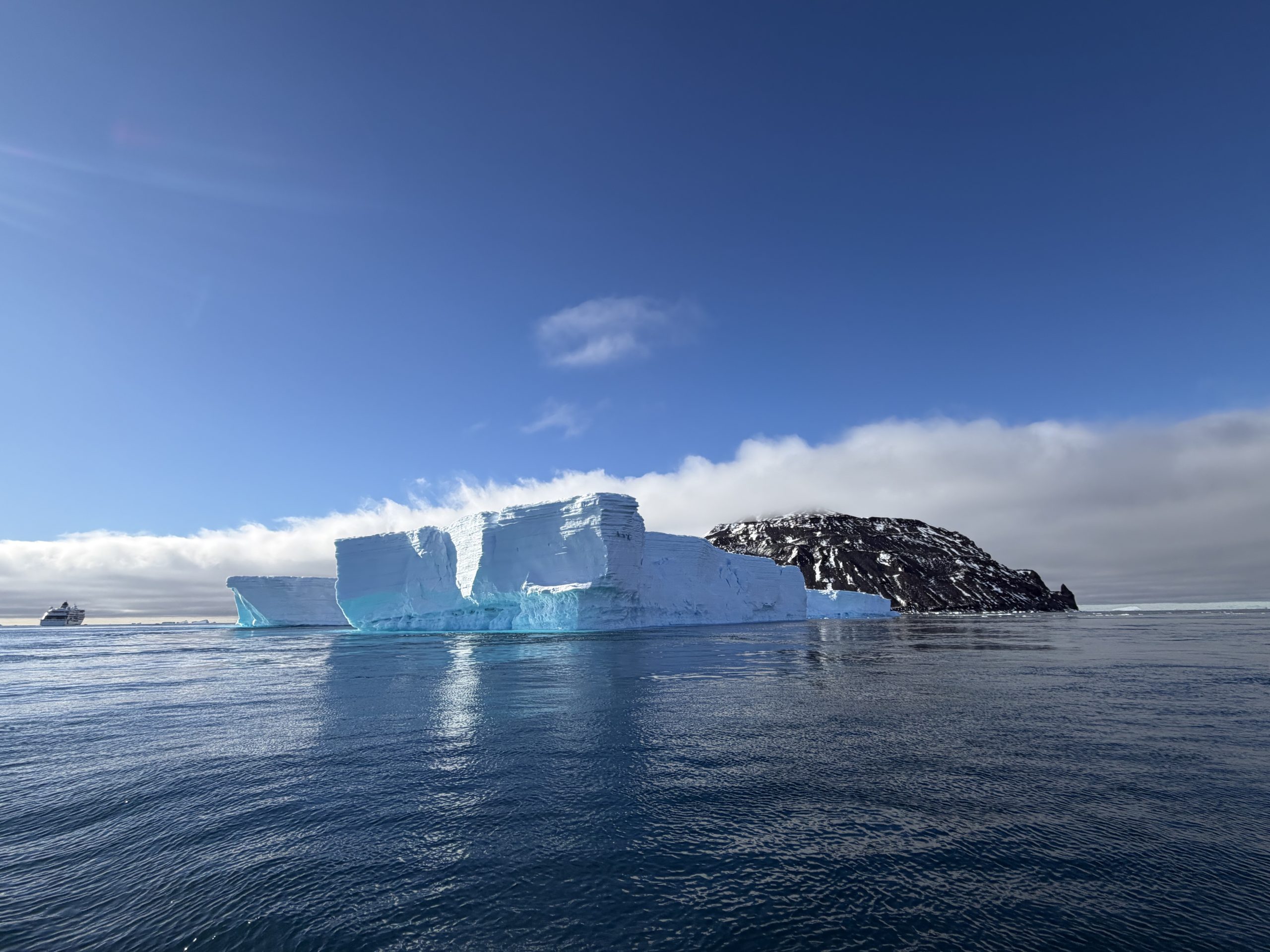
As pagophilic—ice-loving—predators, leopard seals face uncertain futures in a warming Antarctic. Pupping, breeding, and resting are done on Antarctic pack ice, making sea ice loss a direct threat to their lifecycle. Research indicates that air temperatures during winter in parts of the western Antarctic Peninsula, such as the Bellingshausen Sea, sea ice cover lasts up to three months less than it did in the late 1970s.
This habitat transformation may be forcing behavioral adaptations. Scientists have documented leopard seals exhibiting novel food-caching behaviors, taking penguins, fur seals, or elephant seal pups and stashing them under rocks—a strategy previously undocumented in the species. Some researchers suggest this may reflect increased competition for prey or changing prey availability due to climate shifts.
Despite these pressures, the International Union for Conservation of Nature currently lists leopard seals as ‘Least Concern,’ protected under the Antarctic Treaty and the Convention for the Conservation of Antarctic Seals. Yet the species’ reliance on sea ice and its position at the apex of a climate-sensitive food web make long-term monitoring essential.
The leopard seal embodies the Antarctic paradox: a supremely adapted predator thriving in one of Earth’s harshest environments, yet increasingly vulnerable to changes originating far beyond the Southern Ocean. As research continues to unveil the complexities of individual specialization, site fidelity, and ecosystem impact, these spotted hunters remind us that even apex predators operate within delicate ecological balances. Understanding and protecting leopard seals means preserving not just a species, but the intricate web of Antarctic life they help regulate.
Source: Shirihai, Hadoram. The Complete Guide to Antarctic Wildlife: Birds and Marine Mammals of the Antarctic Continent and the Southern Ocean, 2nd edition, illustrated by Brett Jarrett. Princeton University Press, 2008. Leopard Seal Hydrurga leptonyx species account, Plate 29, pp. 346–348.